

Latency vs Throughput: Understanding the Key Differences and Why They Matter
#9 Unlock the Secrets to Optimizing Performance in Systems and Networks

Did you know that a delay of just a few milliseconds can cost businesses millions? Whether you're streaming a video, loading a website, or processing data, the battle between latency and throughput is at the heart of your experience.
Latency and throughput are critical performance metrics that dictate how efficiently systems and networks operate. While they are often used interchangeably, they represent fundamentally different aspects of performance. Post this blog you will have having clear picture.
What is Latency?
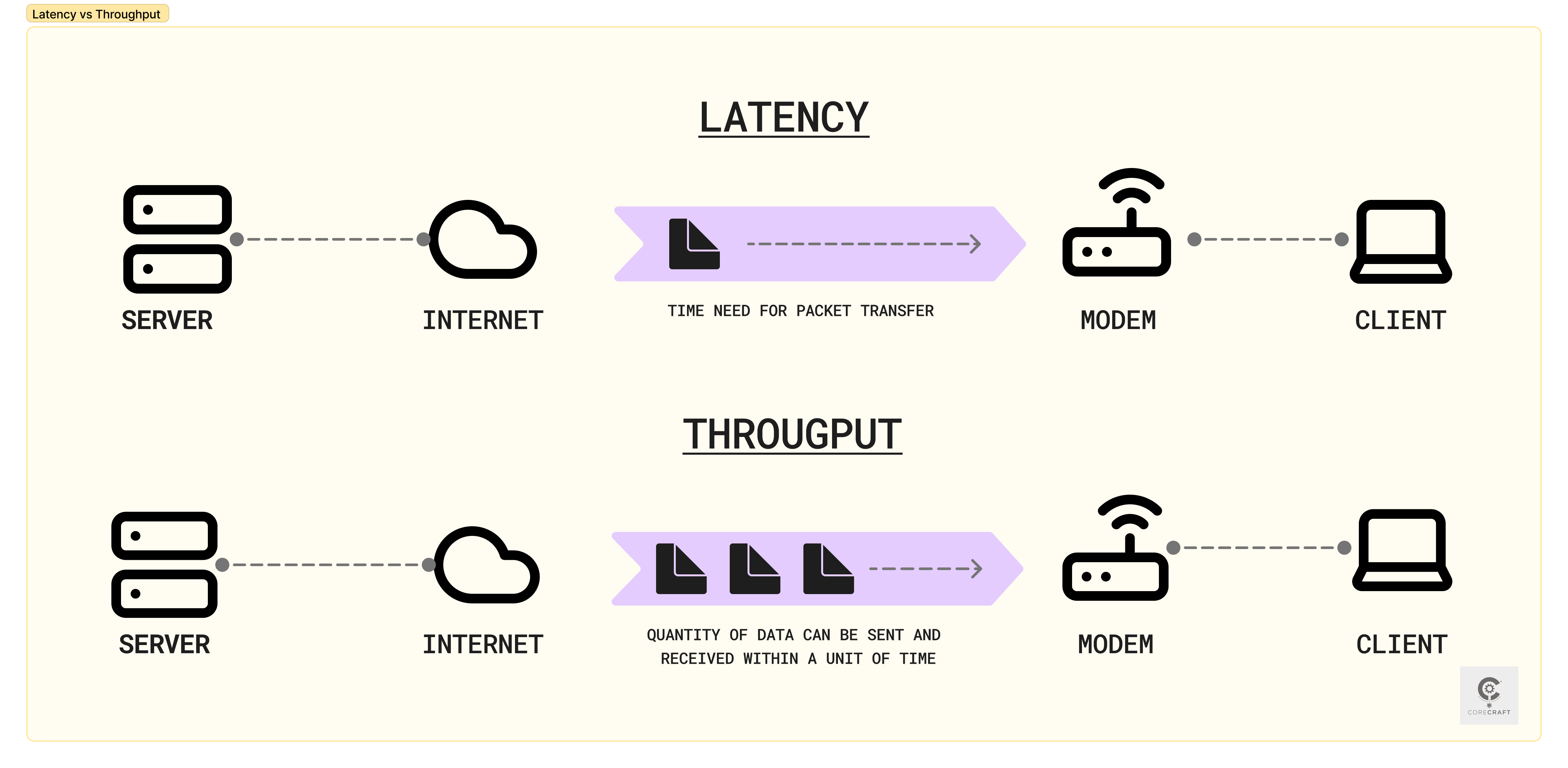
Latency refers to the time it takes for data to travel from its source to its destination. It’s often measured in milliseconds (ms) and is a key indicator of responsiveness in systems.
Examples:
The delay between clicking a link and the webpage starting to load.
The lag you experience during a video call when the other person’s audio takes a second to reach you.
Importance:
Low latency is crucial for real-time applications like online gaming, video conferencing, and financial trading, where even a slight delay can disrupt the experience or lead to significant losses.
What is Throughput?
Throughput refers to the amount of data that can be transferred from one point to another within a given time frame. It’s typically measured in bits per second (bps), megabits per second (Mbps), or gigabits per second (Gbps).
Examples:
Downloading a large file in seconds over a high-speed internet connection.
A network handling thousands of simultaneous user requests without slowing down.
Importance:
High throughput is essential for tasks that involve transferring large volumes of data, such as streaming high-definition videos, cloud computing, or data backups.
Latency vs Throughput: The Relationship
While latency measures delay, throughput measures capacity. They are interconnected but not the same. For instance, low latency doesn’t always mean high throughput, and vice versa.
Examples:
A network with low latency but limited throughput might allow quick responses but struggle with large data transfers.
A high-throughput network with high latency might handle large files efficiently but feel sluggish for real-time tasks.
Importance:
Balancing latency and throughput is key to optimizing system performance. For example, a gaming server prioritizes low latency, while a file-sharing service focuses on high throughput.
Real-World Applications
Latency and throughput play a vital role in various industries, from tech to healthcare.
Examples:
E-commerce: Low latency ensures quick page loads, while high throughput handles high traffic during sales.
Healthcare: Real-time patient monitoring requires low latency, while medical imaging systems need high throughput for large data transfers.
Importance:
Understanding these metrics helps businesses tailor their systems to meet user expectations and operational demands.
How to Measure and Optimize Latency and Throughput?
Tools and techniques exist to measure and improve latency and throughput, ensuring systems perform at their best.
Examples:
Latency Optimization: Using content delivery networks (CDNs) to reduce the distance data travels.
Throughput Optimization: Upgrading network infrastructure or using compression algorithms to handle more data.
Importance:
Regular monitoring and optimization can prevent bottlenecks, enhance user satisfaction, and save costs.
Conclusion
In a world where speed and efficiency are paramount, understanding latency and throughput is no longer optional—it’s a necessity. Whether you're a developer, business owner, or tech enthusiast, mastering these concepts can give you a competitive edge.
Thank You for Reading!
If you found this article helpful, hit the ❤️ button and consider subscribing for more content every week.
Have questions or suggestions? Leave a comment—I’d love to hear your thoughts!
Stay connected:
Follow me on LinkedIn and X to stay updated with my latest posts.