

How to Learn System Design Through Original Projects (Without Copying)
#24 Skip the Copy-Paste. Start Designing Scalable Systems That Stand Out.

The uncomfortable truth: Most developers learn by copying.
We find a tutorial, paste the code, tweak it slightly, and call it
a day. It feels productive. It looks like learning.
But here’s what actually happens in your brain: nothing sticks.
“You can’t understand what you haven’t built yourself.”
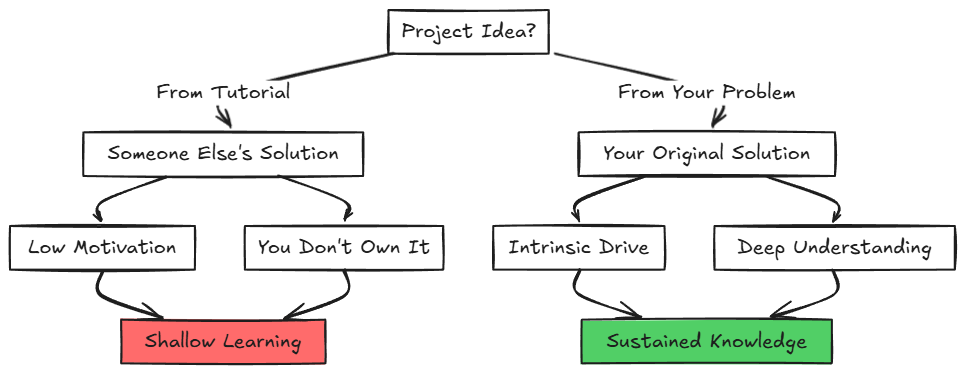
You know what does stick? Building something original that nobody’s done exactly your way. Not copying a tutorial. Not following a cookie-cutter course project. Actually, solving problems, you define.
This is the difference between understanding system design and memorizing it.
Quick heads-up: If you’re curious about architectural choices like serverless, you’ll love our YouTube video,
EP5: Terraform Explained: Infrastructure as Code Made Simple
It dives into how decisions like this shape your projects.
Why Original Projects Beat Everything Else
Copy-pasting code doesn’t teach you to think. It teaches you to follow instructions.
But system design isn’t about following a script—it’s about making trade-offs, understanding constraints, and building something that works specifically for your problem.
When you build something original, something magical happens:
You stop being a copier and start being a creator. You’re not re-implementing Twitter’s feed algorithm. You’re solving your specific problem. Your brain has to think. It has to decide. It has to fail and recover.
You build judgment. Judgment comes from deciding between options. Do I use SQL or NoSQL? One server or multiple? Cache or no-cache? Copy-paste projects make these decisions for you. Original projects demand you make them.
“The best engineers aren’t those who know all the answers—they’re the ones who’ve learned to ask the right questions.”
You own your mistakes. When your homemade chat app crashes under 50 concurrent users, you figure out why. You don’t Google “chat app crashes under load” and find someone else’s solution. You debug. You learn. You improve.
This is the kind of knowledge that survives an interview, sticks in a job, and compounds over your career.
Step 1: Choose a Problem Only You Have
This is where originality starts.
Don’t think “what project should I build?”
Think “what problem do I actually face that needs a system?”
Maybe you’re managing a side project and hate your current setup. Maybe there’s a gap in tools you use daily. Maybe you’re curious about something but can’t find an exact tutorial for it.
That’s your project.
I’m serious about this. Pick something you care about solving. Not something a course told you to build. Not something “everyone” is building.
“The best projects are born from real friction, not from course syllabi.”
Here’s why these matters: You’ll have intrinsic motivation to solve it well. You’ll care about the edge cases. You’ll iterate because you’re the user and you know what’s broken.
Examples (not to copy, but to inspire your thinking):
A tool that tracks your own learning progress in a specific skill
A scheduling system for a hobby community you’re in
A local notification system for events that matter to you, not generic calendar alerts
A data dashboard for something you actually measure
The point isn’t the idea. It’s that it’s yours.
Step 2: Design It Yourself (Even Badly)
This is the part everyone skips.
You want to code immediately. Don’t.
Sit down and actually design your system. On paper, in a doc, doesn’t matter. This is where the magic happens—when you force yourself to think before you act.
Ask yourself:
What does this system need to do? (Be specific.)
Who uses it? How many?
What’s the core feature vs. nice-to-haves?
Where will data live?
What happens if it breaks?
Write this down. Badly is fine. You’ll figure it out as you go.
“Bad design on paper beats perfect design in your head.”
The point is: You’re making decisions before you know the “right” answer. You’re learning to think like an engineer instead of like someone following a recipe.
This is where you discover what you don’t know. And that’s gold.
Step 3: Build v1 (Ugly Is OK)
Make something that works. Not beautiful. Not scalable. Works.
Code it however feels natural to you. Use what you know.
If you’re tempted to “do it right” from the start, fight that urge. Premature optimisation kills learning. Ship the simplest version that solves the problem.
Use your design as a rough guide but let reality teach you where it breaks. Your assumptions will be wrong. That’s perfect.
“Done and messy beats perfect and incomplete.”
When your MVP works, you’ve learned more than most courses teach. Take a moment to celebrate. You’ve just crossed from theory into practice.
Step 4: Break It. Then Fix It.
Now the real learning starts.
Simulate problems:
What if 10x more people use this tomorrow?
What if your database goes down?
What if the same data gets requested 100 times in a row?
Try these things. Watch it fail. Now figure out why.
Maybe you add caching. Maybe you split data across multiple servers. Maybe you discover your original design was smarter than you thought.
“Your system doesn’t truly work until it’s survived failure and come back stronger.”
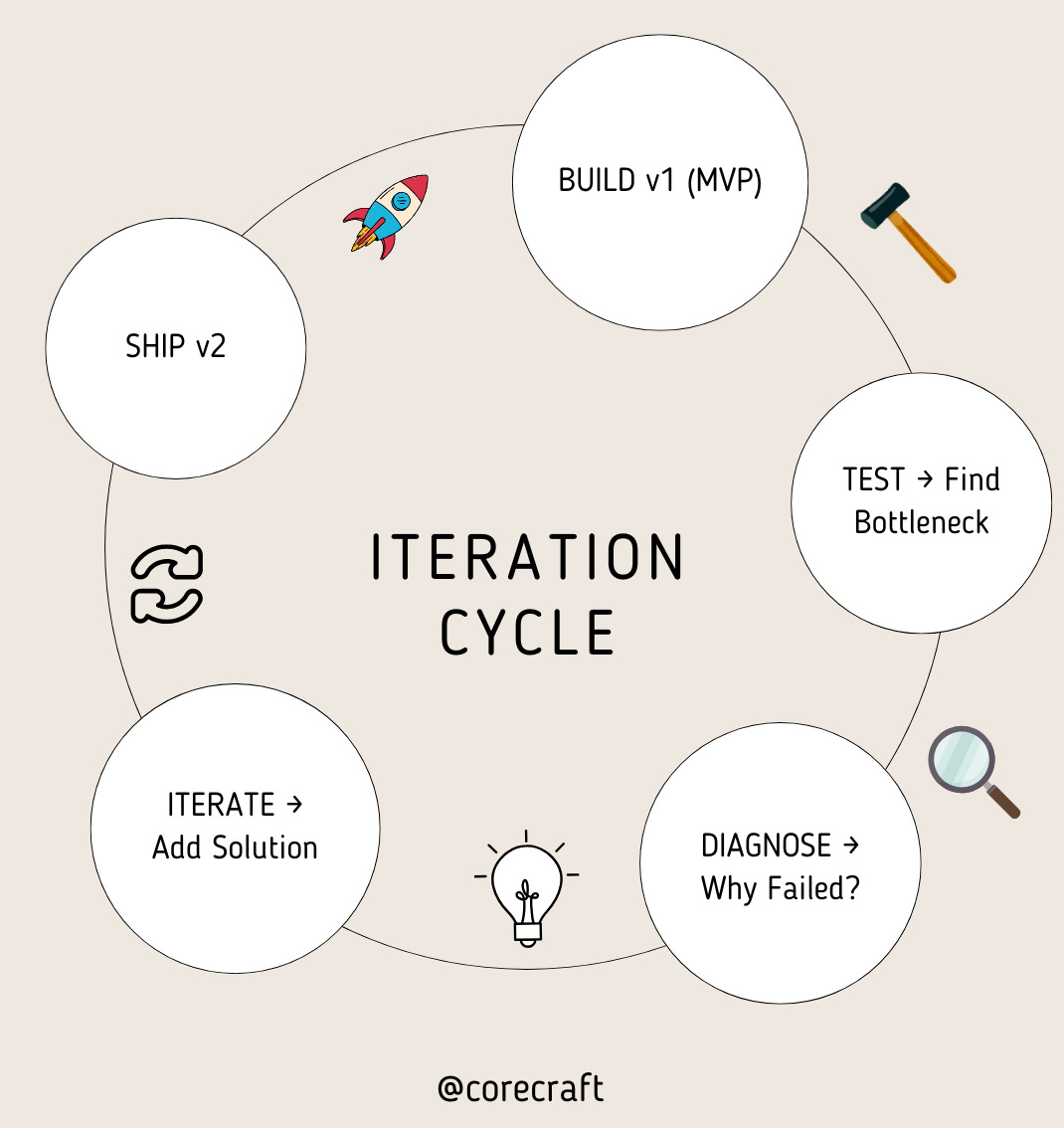
This is system design. Not reading about it. Doing it.
Each problem you solve teaches you something no blog post will explain as clearly as lived experience. You’ll understand why Netflix uses microservices. Why Uber handles concurrent requests the way they do. Why Discord engineered their infrastructure for real-time communication.
You’ll understand because you’ve lived the constraints that led to those decisions.
Step 5: Document Your Decisions (This Is You Teaching)
Write down what you did and why.
Why you chose that database.
What bottleneck forced you to add caching.
How you handled that failure scenario.
What you’d do differently next time.
This isn’t for others (though you can share it). It’s for you, cementing what you learned.
“If you can’t explain your decision, you don’t understand it yet.”
When someone asks in an interview, “Tell me about a system you designed,” you have a real story. Not “I followed a course,” but “I built this for my own use, hit this problem, solved it this way, and learned that...”
That’s the kind of answer that stands out.
The Anti-Plagiarism Angle (Why This Matters More Than You Think)
Here’s what I think about plagiarism in learning: It’s not just unethical. It’s self-sabotage.
When you copy someone else’s project, you’re not learning their system design. You’re learning their code. Big difference.
You’re getting their solutions to their problems. Not solutions to your problems.
And when you hit a novel problem (which you will), you won’t know how to think through it because you never learned to think. You learned to paste.
“Copying teaches you syntax. Building teaches you strategy.”
Original projects force intellectual honesty. You can’t fake it. You have to understand to build. You have to think to iterate.
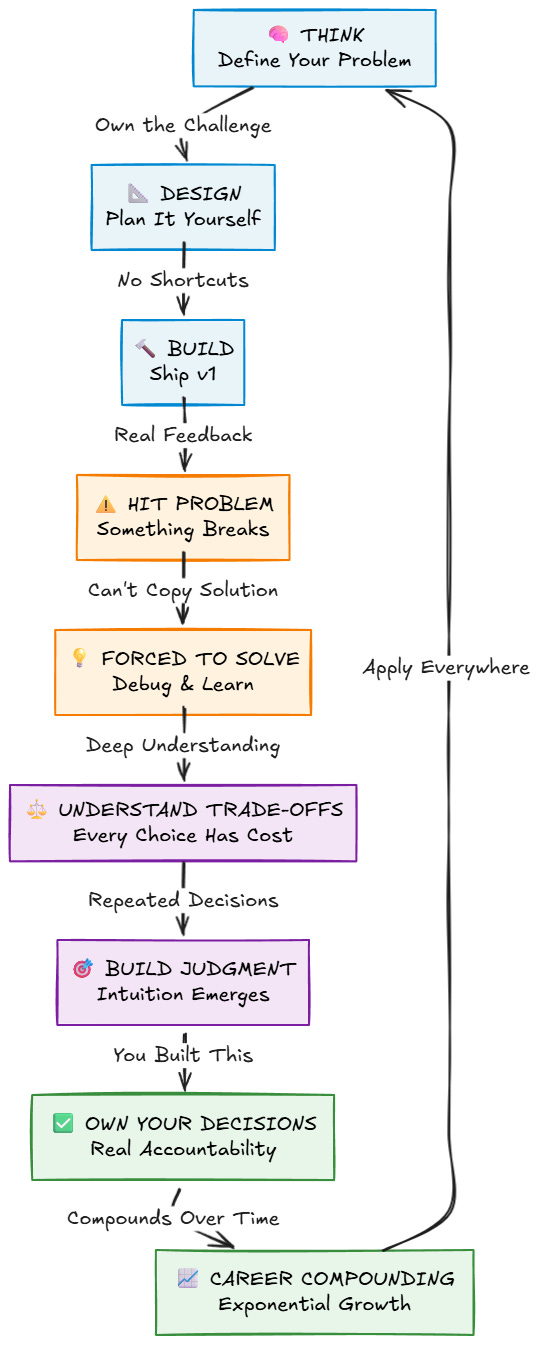
The developers who actually stand out in interviews, in code reviews, in real-world projects—they’re not the best at following tutorials. They’re the ones who’ve shipped original systems. Who’ve failed iteratively. Who’ve made decisions and lived with the consequences.
That’s not just better learning. That’s integrity.
Where to Go from Here
Read architecture posts from real companies (Netflix, Uber, Discord, Stripe). Not to copy, but to see how different brains solve similar problems. Notice how many different valid solutions exist. Ask yourself: “How does this compare to what I built?”
Join communities and share your work. Share what you built. Get feedback. Listen to how others approached different problems. Let that inspire your next iteration—not copy it but learn from it.
Build the next project differently. Apply what you learned to a new original problem. Watch how faster and clearer you think now. Notice patterns emerging. Start building intuition instead of just knowledge.
Document in public. Write about your system, your mistakes, your breakthroughs. Teaching others cements your own understanding. (And it feels good to share something that came from your own hands.)
P.S. — The Real Win
The uncomfortable part of building original projects is that they take time. They’re messy. They require you to sit with confusion longer than a tutorial would.
But that’s also where the value is.
In 3 months of original building, you’ll understand system design better than someone who’s taken 5 courses. Because understanding isn’t about knowing facts. It’s about having felt the trade-offs.
The next time someone asks you about scaling, or caching, or database replication—you won’t reach for a memorized definition. You’ll reach for a story. A real moment when you had to solve it.
And that story, that lived experience, is worth more than a certificate.
Build something. Break it. Fix it. Own it.
Want to explore how these design principles show up in real systems? I’ve written extensively on architecture patterns, scaling challenges, and the specific decisions behind successful products. Check those out to see how the concepts you’re building compare to production systems at scale.
What’s your next original project? Share in the comments what problem you’re thinking of solving. I’m genuinely curious about the systems you’re building, the constraints you’re hitting, and the solutions you’re discovering along the way.
Slow apps killing your projects? Grab my Cache Rules Everything: A Developer’s Guide to Faster Applications for pro caching techniques that 10x speed. Get it now. Peek at my top 3 optimization hacks for more dev wins!
P.P.S.
Creators: Want to reach an engaged audience of developers? Email me at souravb.1998@gmail.com for collaboration or sponsorship opportunities.
Help Us Shape Corecraft Better
TL;DR: Got 2 minutes? Take this quick survey to tell us who you are, what you care about, and how we can make CoreCraft even better for you.
Thank You for Reading!
Loved this? Hit ❤️ to share the love and help others find it!
Get weekly tech insights to code smarter and build your dev career. Subscribe to CoreCraft for practical tips and frameworks you can use today.
Have ideas or questions? Drop a comment—I reply to all! For collabs or newsletter sponsorships, email me at souravb.1998@gmail.com